
A nurse educator is a postsecondary instructor who teaches future registered nurses at nursing schools. The process of how to become a nurse educator begins with earning a B.S. in Nursing and obtaining an RN license. You’ll also need a graduate degree and clinical experience.
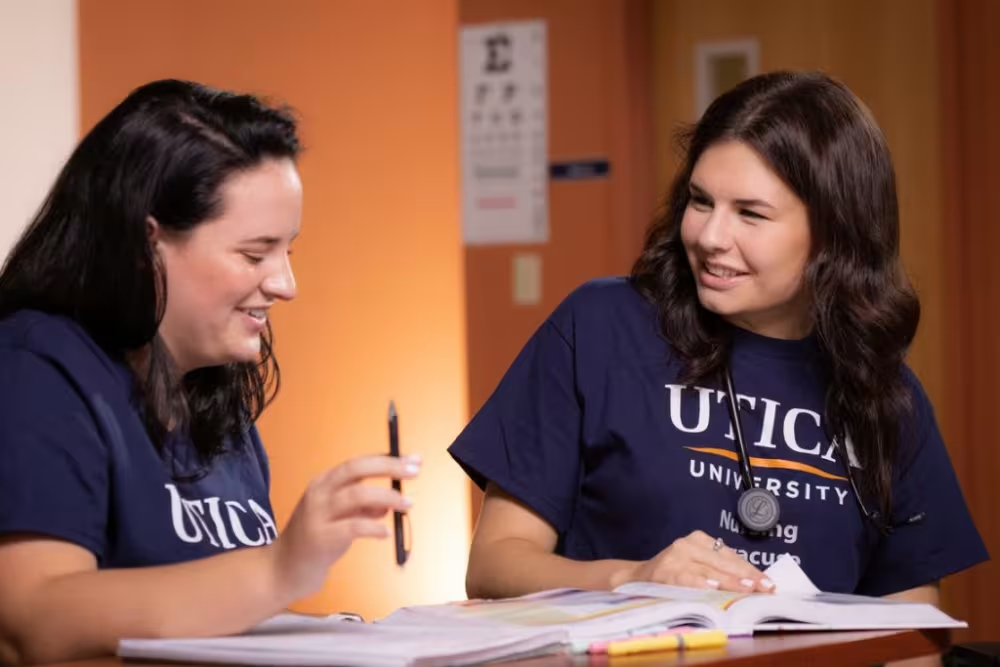
The shortage of registered nurses (RNs) in the U.S. has been widely reported. One factor contributing to the shortage is the lack of nursing faculty. Nationally, the nurse educator vacancy rate is 7.8%, according to the American Association of Colleges of Nursing (AACN). If you’re passionate about education and interested in nursing, you might consider learning how to become a nurse educator.

Learn more about why nurses are in demand.
Utica University prepares students to become all types of nurses, including aspiring nurse educators. Utica’s Accelerated Bachelor of Science in Nursing (ABSN) program offers a faster pathway toward transferring to nursing or switching careers with a non-nursing bachelor’s degree. After completing the degree requirement courses, you can graduate with a B.S. in Nursing in as few as 16 months.
Before making any career decisions, you should get the answers to some common questions, such as “What is a nurse educator?” and “What does a nurse educator do?” Review the pros and cons and explore the process of becoming a nurse educator.
What Is a Nurse Educator?
All nurses are educators to some extent. Patient education is critical to achieving favorable patient outcomes. Nurse educators, however, are different. They are postsecondary faculty members at nursing schools who are responsible for educating future RNs. Nurse educators may teach both didactic courses and hands-on labs. They also provide clinical training to nursing students during clinical rotations.
What Does a Nurse Educator Do?
Nurse educators have a significant responsibility: to ensure that their students are well-prepared to make complex clinical decisions, sometimes in life-or-death situations. To accomplish this, they handle the following tasks:
- Developing the curriculum and lesson plans
- Teaching nursing concepts and hands-on clinical skills
- Assessing students through exams, quizzes, and assignments
- Providing one-on-one guidance and support to students
- Instructing and overseeing students during clinical rotations
Why Become a Nurse Educator? Consider the Pros and Cons
Before considering how to become a nurse educator, you should weigh the potential pros and cons. Some of the advantages of choosing this career path can include:
- Personal satisfaction: You’ll be doing your part to help solve the nursing shortage, ensuring more patients receive the care they need. You’ll also be helping the next generation of RNs achieve their dream career.
- Work-life balance: Compared to clinical roles, nursing education can offer better work-life balance, with more predictable work hours.
- Professional impact: As a nurse educator, you might also work on nursing research.
- Flexibility: You may be able to teach some of your classes remotely or choose your class load and schedule.
- Job growth: There will be a significant demand for nursing instructors for the foreseeable future.
As with any career choice, there may also be disadvantages. Some cons of becoming a nurse educator could include:
- Stress: Some individuals may find it emotionally draining to juggle all the academic responsibilities and work with students.
- Administrative requirements: Just as clinical RNs must deal with paperwork, so too must nurse educators.
- Academic requirements: Pursuing a career as a nurse educator requires an advanced degree. If you love learning, however, this might not be a disadvantage.
Important Skills and Qualities for Nurse Educators
One of the most important qualifications for a nurse educator is being a highly competent nurse with extensive bedside experience. Nurse educators require a firm grasp of patient care to teach it effectively. Aside from this technical knowledge, some of the most essential soft skills and qualities for nurse educators include:
- Adaptability
- Communication skills
- Empathy
- Growth mindset
- Integrity
- Leadership
- Patience
- Professionalism

Discover the importance of networking in nursing.
How to Become a Nurse Educator: Step-by-Step
Even if you are not sure which specific nursing path is right for you, you can begin working toward your goals. Later, you can decide if you want to pursue a career in education.
1. Earn a B.S. in Nursing
The first step toward any nursing career is to contact a nursing school. At Utica, an admission representative will provide step-by-step guidance on applying to our ABSN program. Once enrolled, you’ll work through three main learning components:
- Coursework: Didactic coursework is available online or in-person at our main campus in Utica, New York.
- Labs: In-person nursing skills and simulation labs teach you how to perform key nursing tasks, like IV placement, and how to respond to various clinical situations.
- Clinical rotations: Clinical rotations are completed at various healthcare facilities throughout Central New York. You’ll provide patient care under supervision.
2. Pass the NCLEX
After graduating with a B.S. in Nursing, you’ll need to pass the NCLEX-RN. This national licensure exam is challenging, prompting some nursing students to start studying as early as their first semester. You can expect to take the NCLEX-RN within a month or two of your graduation date. After passing, you can obtain a state-issued RN license.
3. Gain Clinical Experience
You’ll need plenty of clinical experience in your chosen specialty area before you can pursue career advancement as a nurse educator. Many graduate-level degree programs require a couple of years of experience before you can apply. You can continue gaining clinical experience while working through school. A strong candidate for a nurse educator role might have five to ten years of clinical experience.
4. Earn a Graduate Degree in Nursing
Every aspiring nurse educator must have a graduate degree in nursing. It’s possible to become a nurse educator with just a Master of Science in Nursing (MSN). You’ll be a more competitive job applicant, however, if you earn a Doctor of Nursing Practice (DNP). In fact, according to one survey, nearly 80% of vacancies among nursing faculty were for positions that required or preferred a doctorate.
A DNP will take longer to earn, but it will also provide more thorough preparation for teaching your own students in the future. Regardless of which degree option you choose, look for a program with a concentration in nursing education. After graduating, you’ll be ready to apply for your first teaching job.
5. Obtain a Professional Certification
Along with earning a DNP, another way to become a more competitive job applicant is to earn a professional certification. The National League for Nursing (NLN) offers three certification options for nurse educators.
Nurse Educator Salary and Career Outlook
When planning your career, it’s always smart to consider the nurse educator salary expectations and job growth projections. According to the U.S. Bureau of Labor Statistics (BLS), the median annual salary for postsecondary nursing instructors was $79,940 as of May 2024.
The BLS has estimated a much faster-than-average job growth rate for nursing instructors, projecting that employment will increase by 17% from 2024 through 2034.
Are There Advancement Opportunities for Nurse Educators?
Transitioning from RN to nurse educator is an advancement opportunity; however, there are also higher-level roles to consider. After gaining teaching experience, some nurse educators may pursue roles such as school dean, provost, department chair, or program director.
Find out how to pay for nursing school.
Begin Your Nursing Path at Utica University
Utica University is your path toward an exciting career in nursing education, where you can help solve the nursing shortage. Utica offers our ABSN program in Utica and Albany, New York, and our Advanced Standing B.S. in Nursing program in Utica. Our nursing students benefit from hybrid learning and the personalized assistance of Academic Success Coaches.
Contact an admission representative today to take the first step toward your new career.
