
Nurses must stay on top of the latest trends in nursing so they can provide quality care with the most advanced evidence-based practices. Recent nursing trends include improvements in technology and the need for more APRNs.

Your nursing education won’t end on your graduation date. Nurses are lifelong learners. You’ll have opportunities to learn something new with each shift and while completing your continuing education requirements. You can also regularly review nursing journals to stay on top of the latest trends in nursing. Being an engaged professional in this manner will help you tackle complex and emerging challenges in the field while providing the best possible care for your patients.
At Utica University, we encourage our students to embrace lifelong learning. Utica’s Accelerated Bachelor of Science in Nursing (ABSN) program provides a comprehensive nursing curriculum that covers fundamental topics, such as pathophysiology, as well as emerging nursing trends, including healthcare informatics. After graduating in as few as 16 months, you’ll be ready to earn your RN license and continue your professional development.
While you’re working through the admission process, consider why it’s essential to stay on top of the latest trends in the field. Let’s start by examining some of the hot topics in nursing today and what they mean for your career.
Why Nursing Trends Matter
As comprehensive as Utica’s curriculum is, it is impossible to cover every scenario you may encounter as a working nurse. Your training will continue long after you leave the classroom. As you focus your efforts on a specific nursing specialty, for example, you’ll learn the nuances of caring for patients within that practice area.
Staying on top of the latest hot topics in nursing is important because it enables you to provide better care.
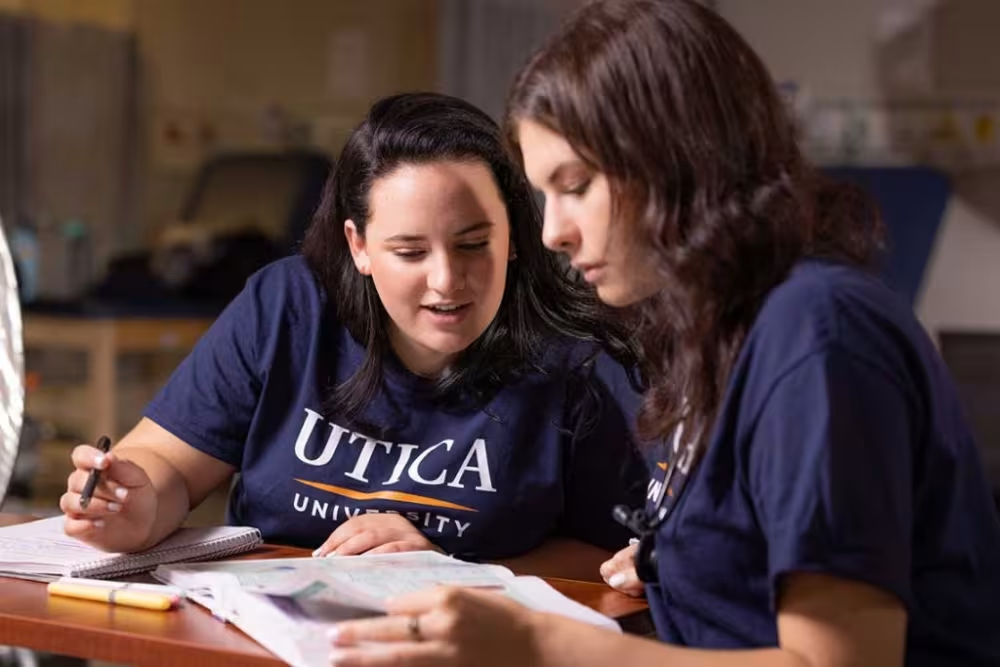
Choose an accelerated nursing program in New York that aligns with your needs.
Top Trends in Nursing Today
Some of the latest trends to keep an eye on include the following.
Persistence of Telehealth
Telehealth has been around for decades. It encompasses everything from providing medication guidance on the phone to conducting appointments via teleconferencing software. By necessity, the COVID pandemic accelerated the adoption of telehealth, and now it’s here to stay. If you provide telehealthcare, keep HIPAA compliance as a top priority and know when to advise patients to seek in-person care.
Remote Patient Monitoring
Emerging healthcare technologies offer exciting ways to improve patient care. Remote patient monitoring enables nurses to remotely monitor real-time data from their patients, such as blood glucose and vital signs, using wearable sensors. This empowers nurses to identify potential problems as soon as they are detectable and make any needed adjustments to the nursing care plan.
Holistic Nursing Care
Nurses have always provided holistic care to their patients. Nurses must consider a patient’s support system at home, ability to travel to appointments, need for community resources, mental healthcare needs, and so on.
Although holistic care is not a new nursing trend, some nurses are raising it to new heights. You might notice that your patient is particularly stressed, for example, and it’s having a negative effect on their mental and physical health. You might recommend yoga, mindfulness meditation, or “nature bathing,” in addition to traditional treatment. Complementary therapies can support conventional healthcare.

Rise in Tech-Focused Nursing Jobs
Nursing informatics has become widely used in the field. Informatics is the nursing specialty that focuses on capturing, storing, and using patient data in HIPAA-compliant ways to achieve objectives like improving patient care and outcomes. Acting as a liaison between nursing staff and IT, nursing informatics professionals help analyze data and train nurses to use data-driven insights to ensure technology supports patient care effectively.
While several nursing roles fall under the umbrella of nursing informatics, some responsibilities may include:
- Ensuring health information systems are up to date
- Developing information systems based on advancing standards of care
- Working with policymakers to improve laws supporting healthcare technology
- Educating staff on updates to electronic health record systems
This growing nursing specialty is also well-compensated. According to the Healthcare Information and Management Systems Society (HIMSS), salaries for nurse informaticists have risen steadily, with 60% of professionals reporting salaries over $100,000 in 2022.
The Potential for AI in Nursing
There are numerous ways that artificial intelligence is impacting nursing. For example, AI can analyze patient data transmitted by wearable health devices and potentially predict deterioration.
AI can also automate certain administrative tasks, reducing RNs’ workload and enabling them to spend more time focusing on their patients. In fact, a 2025 study published by BMC Health Services Research found that 10 extra minutes of patient contact is associated with a 0.05% reduction in mortality.
Based on recorded patient data, AI can detect anomalies or make evidence-based recommendations, potentially alerting nurses to overlooked symptoms or unconsidered treatments.
An Increasing Need for APRNs
A trend in nursing that highlights the benefits of continuing education for nurses is the increasing need for advanced practice registered nurses (APRNs), including certified registered nurse anesthetists (CRNAs), nurse practitioners (NPs), and certified nurse midwives (CNMs). According to the U.S. Bureau of Labor Statistics (BLS), the growth rate for these types of APRNs is expected to be 35% from 2024 through 2034, much faster than average.
The job growth rates for individual specialties during this period are:
- CRNAs: 9%, 4,600 new jobs
- CNMs: 11%, 900 new jobs
- NPs: 40%, 128,400 new jobs
One driving force behind the significant job growth among NPs is the critical need for more primary care providers, particularly in underserved healthcare deserts that lack sufficient access to primary care physicians.

Discover how to become a CRNA.
How Nursing Education Helps You Stay on Top of Trends
Completing your continuing education requirements can introduce you to the latest trends in nursing, as can returning to school to earn a graduate degree. You’ll learn about the latest evidence-based practices and examine emerging healthcare technologies. You’ll also be challenged to sharpen your critical thinking, analytical reasoning, and clinical decision-making skills.
Prepare for a Modern Nursing Career at Utica University
Utica University delivers impactful nursing education aligned with the latest nursing research and evidence-based practices, so you can get on top of the latest nursing trends. You’ll enjoy the flexibility of a hybrid approach at Utica, through online coursework and in-person experiential learning, nursing skills labs, and clinical placements. Whenever you need more support, our attentive faculty and Academic Success Coaches are here to help.
Contact an admission representative today to find out if you are eligible for our ABSN program.
