
Online ABSN programs combine flexible virtual coursework with in-person nursing skills labs and clinical rotations. Students complete lectures, assignments, and assessments through an online learning platform while gaining hands-on patient care experience. This blended approach helps students develop the knowledge and clinical skills needed for nursing.

Online nursing education offers an alternative to traditional classroom learning, but how do online nursing programs work when preparing students for a hands-on profession? Unlike fully online degree programs, online-based accelerated nursing programs combine virtual coursework with in-person skills labs and clinical experiences, allowing students to develop both theoretical knowledge and practical nursing skills.
For students considering a career change, Utica University's Accelerated Bachelor of Science in Nursing (ABSN) program offers a blended learning format designed to help students with prior college experience transition into nursing. Alternatively, our Advanced Standing B.S. in Nursing program offers the same accelerated timeline in a traditional in-person setting. Eligible candidates can graduate in as few as 16 months.
Understanding how online nursing education works can help you determine which program better fits your learning style, schedule, and career goals.
How Do Online Nursing Programs Work?
Online nursing programs use digital learning platforms to deliver academic coursework outside a traditional classroom. While the curriculum covers the same essential nursing concepts as campus-based programs, students access lectures, assignments, and educational resources virtually.
Through an online learning platform, nursing students can typically:
- Access textbooks, readings, and course materials
- Communicate with instructors and receive feedback
- Complete assignments, quizzes, and exams
- Participate in virtual discussions with classmates
- Review learning materials to reinforce difficult concepts
- Watch recorded lectures and instructional videos
Online courses may be synchronous, meaning students attend live virtual sessions at scheduled times, or asynchronous, allowing students to access course materials on their own schedules while meeting established deadlines.
In an ABSN program, online learning is only one component of nursing education. Students must also complete in-person laboratory training and supervised clinical placements to develop the practical skills required for patient care.
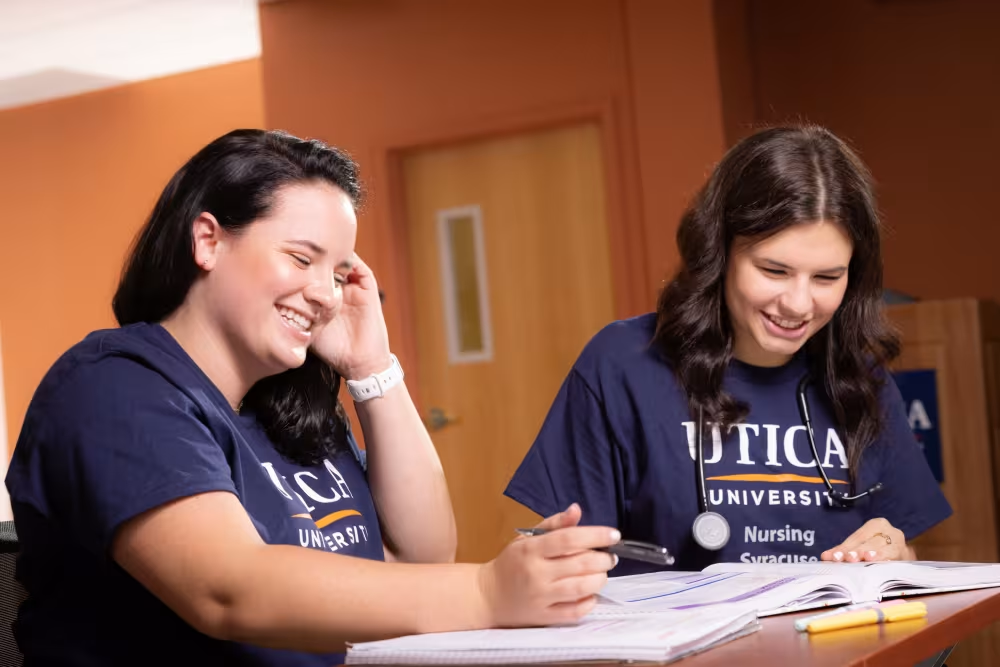
An accelerated nursing program can be demanding. Learn how to manage your time.
What to Expect in Online Nursing School Coursework
Understanding what to expect in online nursing school can help you prepare for the academic demands of an accelerated program. Although coursework is delivered virtually, students still complete a rigorous nursing curriculum that requires consistent participation, critical thinking, and effective time management.
Online ABSN coursework typically covers essential nursing subjects, including:
- Anatomy and physiology: Understanding the structures and functions of the human body.
- Pathophysiology: Exploring how diseases and medical conditions affect normal bodily functions.
- Pharmacology: Learning how medications work, their potential side effects, and principles of safe administration.
- Health assessment: Developing the knowledge needed to evaluate patient health and recognize abnormalities.
- Nursing fundamentals: Studying foundational patient care practices, safety procedures, and professional responsibilities.
- Specialized nursing care: Exploring nursing concepts related to medical-surgical care, pediatrics, mental health, and other patient populations.
While online learning offers flexibility, accelerated nursing students must remain organized and engaged. Developing a consistent study routine, tracking assignment deadlines, and communicating with instructors can help students manage their coursework successfully.
Technology Requirements for Online Nursing School
To participate in online coursework, students generally need a computer, reliable internet access, and the ability to navigate a learning management system (LMS), such as Canvas.
Depending on the program, additional technology requirements may include a webcam, microphone, compatible software or applications for virtual assessments, and interactive learning activities.
Before beginning an online ABSN program, students should review their school's technology requirements and become familiar with the learning platform to minimize disruptions during the semester.
Beyond Online Learning: The Hands-On Components of an ABSN Program
Keep in mind that nursing is a hands-on profession that requires practical training. That's why online-based ABSN programs combine virtual instruction with in-person nursing skills labs and clinical rotations.
These experiences help students apply what they've learned online, strengthen their clinical judgment, and develop confidence in patient care environments.
Nursing Skills and Simulations Labs
Nursing skills and simulations labs provide a controlled environment where students practice essential nursing procedures before performing them in clinical settings.
Using medical equipment, simulation technology, and patient manikins, students may practice skills such as:
- Administering medications safely
- Communicating with patients and healthcare teams
- Measuring and interpreting vital signs
- Performing patient assessments
- Practicing wound care and infection prevention
- Responding to simulated patient emergencies
Under faculty supervision, students receive feedback and gain experience applying nursing concepts to realistic patient care scenarios.
Clinical Placements
Clinical placements allow nursing students to gain supervised experience working with patients in healthcare facilities.
During these experiences, students apply classroom knowledge and laboratory skills while learning from experienced nursing professionals. Depending on the program and available placements, clinical rotations may introduce students to settings such as hospitals, community health facilities, and specialty care units.
These experiences help students develop clinical reasoning, communication, and teamwork skills while exploring potential nursing career interests.
Unlike online coursework, skills labs and clinical experiences require students to attend designated locations at scheduled times. Prospective students should consider these in-person commitments when evaluating an online ABSN program.

Benefits of Online Coursework in an Accelerated Nursing Program
Online coursework can offer several advantages for students pursuing an accelerated nursing degree. By combining virtual instruction with hands-on learning, ABSN programs provide a structured educational experience while allowing students greater flexibility in completing certain academic requirements.
Interactive Online Nursing Classes
Online nursing courses use digital tools to help students engage with course materials and apply nursing concepts.
Depending on the program, these resources may include recorded lectures, interactive quizzes, virtual case studies, discussion boards, and digital simulations.
Students can revisit challenging lessons, review instructional materials, and reinforce their understanding before participating in skills labs or clinical placements.
Flexible Learning
One of the primary benefits of online coursework is the ability to complete certain learning activities without traveling to campus for traditional lectures.
Students may be able to watch recorded lessons, review readings, and complete assignments at times that work best for their schedules, provided they meet course deadlines.
This flexibility can be especially valuable for career changers and students balancing personal responsibilities. However, an accelerated nursing program remains a significant time commitment, and students must plan around required in-person labs, clinical placements, and scheduled assessments.
Supportive Faculty and Academic Resources
Online learning doesn't mean students must navigate nursing school independently. Faculty members can provide guidance, answer questions, and offer feedback as students progress through their coursework.
Depending on the program, students may also have access to academic advisors, tutoring services, technical assistance, and other student support resources.
Taking advantage of these resources can help students address academic challenges, stay organized, and build confidence throughout their nursing education.
Start Your Nursing Journey With Utica University's ABSN Program
At Utica University, the ABSN program allows students to engage with course materials through the university's e-learning platform while applying their knowledge in supervised healthcare settings. If you hold a non-nursing bachelor’s degree or college credit, you could earn your nursing degree in as few as 16 months.
Request information today to connect with a Utica University admission representative.
