
Hospice nurses provide compassionate end-of-life care, tasked with responsibilities such as pain management and family support. The process of how to become a hospice care nurse starts with earning a nursing degree. Then, pass the NCLEX-RN and obtain your nursing license.

The number of hospice patients in the U.S. has been climbing in recent years, reaching 1.9 million in 2025, according to the Centers for Medicare & Medicaid Services. The increased demand for hospice care creates more opportunities for nurses interested in working with individuals at the end of life. If you aren’t a registered nurse (RN), you may be curious to learn how to become a hospice nurse when you don’t yet have a nursing degree.
At Utica University, you could earn a nursing degree in as few as 16 months through our Accelerated Bachelor of Science in Nursing (ABSN) or Advanced Standing B.S. in Nursing program. If you hold a non-nursing bachelor’s degree or have earned at least 65 credits, you could fast-track your transition into nursing and pursue a variety of nursing specialties, including hospice care.
Before starting, you’ll want to examine what a hospice nurse does, the skills they need, and how to become a licensed registered nurse.
What is a Hospice Nurse?
According to the Hospice and Palliative Nurses Association, a hospice nurse protects terminally ill patients from “burdensome interventions” and provides compassionate end-of-life care in homes and dedicated inpatient facilities.
What Does a Hospice Nurse Do?
Hospice nurses work as part of an interdisciplinary care team to provide personalized care, pain and symptom management, and family support.
Hospice care is “comfort care,” not therapeutic. This means it’s intended to relieve pain and manage the patient’s other symptoms but not to cure the underlying problem. Hospice care can help patients at the end of life live their last days with dignity and comfort.
With that goal in mind, a hospice nurse may perform any of the following tasks:
- Administer medications.
- Collaborate with a hospice team that may include other providers, pharmacists, chaplains, social workers, and nursing assistants.
- Discuss symptoms with the patient, ensuring their pain is well-managed.
- Monitor the patient’s status and assess for changes.
- Provide psychosocial support to the patient and family caregivers and refer them to support groups and other resources as needed.
- Set up durable medical equipment and teach family caregivers how to operate it.
- Show family caregivers how to use various medical supplies and care for the patient’s hygiene needs.
Patient and family caregiver education is a major part of this nursing role, and nurses need to approach it with sensitivity and emotional intelligence. For example, family members might want to know about the signs to watch out for that can indicate their loved one is very close to death.
Where Do Hospice Nurses Work?
Hospice care is often delivered in patients’ homes, as many people prefer to live out their days in familiar surroundings close to loved ones. As a result, many hospice agencies provide patient care in both the home and hospice facilities. Hospice nurses may also visit patients in hospitals, nursing homes, and assisted living facilities.
Essential Skills and Characteristics for Hospice Nurses
Because of the nature of hospice care, nurses must be especially compassionate, empathetic, and emotionally intelligent. They must be attuned to the emotional, mental, and spiritual needs of patients and loved ones, as well as their physical and medical needs.
Hospice nurses must be aware of end-of-life issues and consider the patient and family’s background and values to provide culturally sensitive care.
Skills and characteristics that hospice nurses need include:
- Attention to detail
- Cultural competence
- Emotional resilience
- Grief and bereavement support
- Pain management skills
- Patience
- Patient advocacy
- Patient and family caregiver education
Emotional resilience is vital for hospice nurses, as this job can be challenging at times. Hospice nurses understand that when they meet a new patient, they are unlikely to continue working with that patient for a prolonged period. It can be emotionally challenging to lose patients regularly. Hospice nurses need to practice self-care to avoid burnout.

Steps to Becoming a Hospice Nurse
If you feel you would be well-suited to this career, consider how to become a hospice nurse, starting with the academic requirements.
1. Meet the Educational Requirements for Hospice Nursing
The process of becoming a hospice nurse follows the same steps as for other RNs. You’ll need a nursing degree, preferably a Bachelor of Science in Nursing (BSN). Utica’s accelerated program grants a BSN that prepares you to pursue any nursing specialty, including hospice care. Utica offers two pathways, depending on your educational background:
- ABSN: For candidates who hold a non-nursing bachelor’s degree or at least 65 credits from an accredited institution. Location: the university’s main campus in Utica or its learning site in Albany.
- Advanced Standing B.S. in Nursing: For candidates who hold an associate degree from a regionally accredited institution and 60 credits in liberal arts courses. Location: main campus in Utica.
Learn more about Utica’s eligibility requirements.
Our blended learning approach includes:
- Online coursework teaches nursing concepts, including pharmacology, pathophysiology, and beyond.
- Nursing labs help students develop nursing skills and apply the nursing process to patient-care scenarios.
- Clinical placements provide real-world experience delivering patient care under supervision.
2. Obtain Licensure
All aspiring RNs must pass the same exam: the NCLEX-RN. This national licensure exam is challenging, so you’ll need plenty of time to study. Utica offers Academic Success Coaches with whom you can work to prepare for the exam. We also provide extensive NCLEX prep resources to help you succeed. After passing the NCLEX, you can apply for your state-issued nursing license.
3. Gain Clinical Experience
When you’re ready to apply for hospice nursing jobs, consider focusing on positions available in hospitals, nursing homes, and hospice care centers.
Generally, hospice care agencies prefer hiring nurses with at least a few years of bedside clinical experience. This is because a hospice nurse working in a patient’s home must practice independently.
4. Obtain Hospice Nurse Certification
After gaining clinical experience in hospice care, you may wish to pursue professional certification to demonstrate your knowledge and career qualifications. This may help you pursue career advancement. One option is the certification from the Hospice and Palliative Credentialing Center (HPCC).
Some nurses gain experience or certification in other specialty areas, such as oncology, geriatrics, or pediatrics.
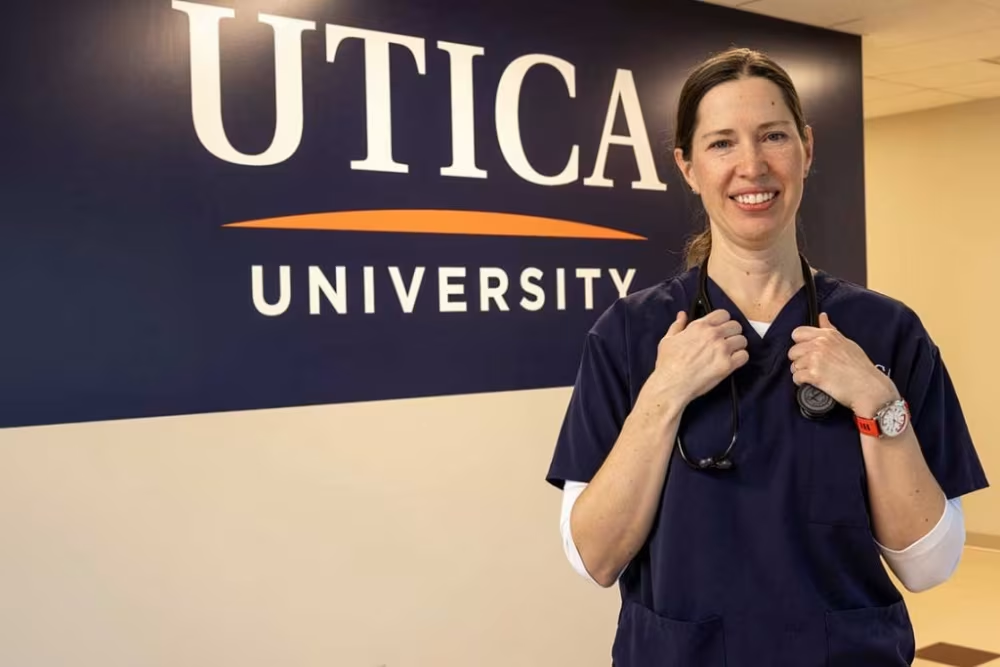
Pursue Your Future in Hospice Care at Utica University
Utica University’s ABSN or Advanced Standing B.S. programs in Albany or Utica can help you pursue a career working with patients at the end of life.
Request information today to learn more.
