
Advanced nursing degrees include the Master of Science in Nursing and Doctor of Nursing Practice. Earning one of these graduate-level degrees is a requirement for pursuing advanced nursing roles, such as nurse practitioner, nurse midwife, nurse anesthetist, and clinical nurse specialist.
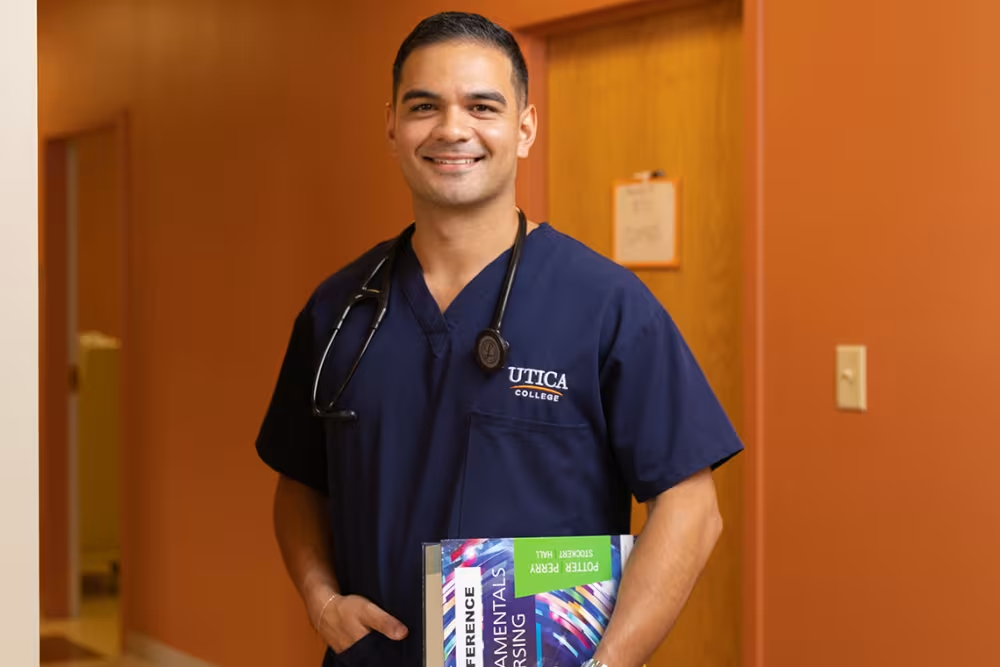
Advanced nursing degrees position you for career advancement at the bedside or in non-clinical settings. To pursue one, you must first hold a Bachelor of Science (B.S.) in Nursing. If you already have a non-nursing degree or at least 65 non-nursing college credits, you could be eligible to complete a B.S. in Nursing at Utica University in as few as 16 months.
Utica’s Accelerated Bachelor of Science in Nursing (ABSN) program in New York combines rigorous nursing coursework with an accelerated format, letting you build the skills needed for clinical practice and graduate study faster than traditional nursing programs.
Before planning your career path, explore the types of advanced nursing degrees and the roles they support.
What Are Advanced Nursing Degrees?
An advanced nursing degree is a graduate-level credential beyond a bachelor’s. These degrees expand clinical knowledge and skills and typically support career advancement.
You can also earn specialty certifications through professional organizations or complete graduate certificates at colleges, but these credentials enhance your development without conferring a degree.
Types of Advanced Nursing Degrees
There are several types of advanced nursing degrees to choose from; your choice should align with your career goals.
- The Master of Science in Nursing (MSN) is generally a practice-focused program with concentrations in clinical specialties, administration, or education.
- The Doctor of Nursing Practice (DNP) is a terminal professional degree that prepares nurses for leadership in clinical practice.
- The Doctor of Nursing Anesthesia Practice (DNAP) is a specialized doctorate for certified registered nurse anesthetists.
- The Doctor of Philosophy (PhD) in Nursing is a research-oriented doctorate for those interested in advancing nursing theory.
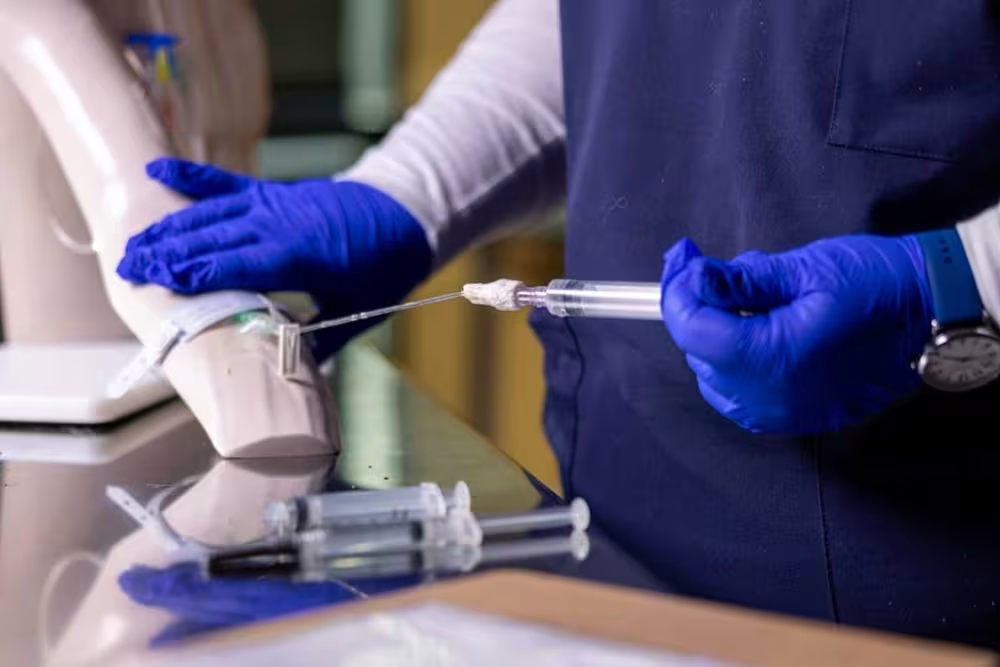
Try these tips on how to succeed in nursing school.
What Is Advanced Practice Nursing?
Advanced practice registered nurses (APRNs) are highly educated clinicians who manage complex cases and often lead efforts to improve patient outcomes. They have broader practice authority than registered nurses and, in some states, can prescribe medications.
An advanced practice nursing role requires a graduate-level nursing degree tailored to its specialty. Advanced degrees for nurses who intend to step into APRN roles will focus on specific practice areas for those roles.
Advanced Practice Nurse Roles
As you plan your career, decide which advanced practice nursing role best fits your interests. The four main APRN roles are:
- Nurse practitioner (NP)
- Clinical nurse specialist (CNS)
- Certified registered nurse anesthetist (CRNA)
- Certified nurse midwife (CNM)
Within each category you can further specialize; for example, NPs may focus on family, adult-gerontology, psychiatric-mental health, or women’s health, while CRNAs may focus on pediatric anesthesia.
Nurse Practitioner (NP)
Nurse practitioners (NPs) hold at least an MSN and certification in a specialty. They diagnose and manage health conditions, develop care plans, provide exams and health education, and prescribe medications.
How a B.S. in Nursing From Utica Prepares You to Be an NP
During your clinical rotations in our ABSN program, you’ll work with healthcare professionals to treat people from all walks of life. You’ll learn to recognize complex health issues and apply appropriate nursing intervention.
Interested in nursing outside the hospital? Explore alternative nursing careers.

Clinical Nurse Specialist (CNS)
Clinical nurse specialists (CNSs) also hold an MSN and may specialize by patient population. They diagnose, treat, and, in some states, prescribe medications.
CNSs combine direct care with organizational leadership, influencing policy, advocating for training, and ensuring evidence-based practice.
How a B.S. in Nursing From Utica Prepares You to Be a CNS
ABSN coursework covers core topics like physiology, pharmacology, and physical assessment, with lab components that reinforce these skills. You also study leadership, communication, and health informatics to learn how to drive organizational change and improve patient outcomes.
Certified Registered Nurse Anesthetists (CRNA)
Certified registered nurse anesthetists (CRNAs) administer anesthesia and other medications and support patients during recovery. Becoming a CRNA requires a DNP or DNAP focused on anesthesia, clinical training and a passing score on the National Boards of Certification and Recertification of Nurse Anesthetists exam.
How a B.S. in Nursing From Utica Prepares You to Be a CRNA
Our program teaches anesthesia concepts in simulation labs and clinical rotations, prepares you for the NCLEX-RN, and provides test-taking strategies applicable to the NBCRNA.
Certified Nurse Midwife (CNM)
Certified nurse midwives (CNMs) specialize in labor, delivery and women’s reproductive health, caring for patients from adolescence through menopause and supporting expectant mothers before, during and after birth.
CNMs complete a graduate-level nurse-midwife program and pass the American Midwifery Certification Board exam.
How a B.S. in Nursing From Utica Prepares You to Be a CNM
The ABSN curriculum and clinicals introduce you to maternity care and the hospital maternity wing. If nurse midwifery interests you, you can focus on it during clinical experiences.
How Much Do Advanced Practice Registered Nurses Make?
Advanced nursing roles are well-compensated. According to 2024 data from the U.S. Bureau of Labor Statistics (BLS), nurse anesthetists have a median annual salary of $223,210, while nurse practitioners earn $129,210. Nurse midwives earn $128,790 per year as a median annual salary, but the BLS does not report salary data for clinical nurse specialists.
Begin Your Path to Advanced Practice at Utica University
Utica University’s ABSN program lets you become an RN sooner and start working toward an advanced nursing career. You can graduate in as few as 16 months after completing required degree courses and receive support from Academic Success Coaches.
Request information and connect with an admission representative today to get started. There is no waitlist, and three start dates allow you to begin when it fits your schedule
