
Skilled nursing care is provided to patients who are well enough to be discharged from a hospital, but not yet well enough to return home. At a skilled nursing facility, patients can receive nursing care as well as physical, occupational, speech, and respiratory therapy.

Skilled nursing refers to rehabilitative care provided to patients. What is skilled nursing’s main purpose? It’s designed to treat and support patients who are well enough to be discharged from the hospital but not yet well enough to return home without support. Skilled nursing is a practice area you may be interested in if you’re thinking about pursuing nursing specialties related to long-term care but aren’t sure that you’d like to work in an assisted living facility.
No matter which nursing specialty you plan to pursue, you can work toward your nursing career at Utica University. Utica’s Accelerated Bachelor of Science in Nursing (ABSN) program enables you to graduate in as few as 16 months if you have prior college education. You’ll graduate ready to take the NCLEX-RN, obtain licensure, and pursue a job in a skilled nursing facility or other clinical setting.
First, take a closer look at questions such as “What is skilled nursing?” and “What is a skilled nursing facility?” Learn which patients may benefit from skilled nursing and how this model of care differs from long-term care provided in an assisted living facility or nursing home.
What Is Skilled Nursing?
All nurses are skilled clinicians, but skilled nursing refers to a specific nursing specialty or practice area. Skilled nursing is specialized care provided to patients who need temporary rehabilitative care in a clinical setting. Patients in need of skilled nursing care are generally recovering from surgery, a major illness, or an injury.
While receiving skilled nursing care, patients can continue to make progress toward a full recovery. They can also receive rehabilitative therapies and close monitoring.
What Is a Skilled Nursing Facility?
A skilled nursing facility is not the same as an assisted living facility or a nursing home, although some assisted living facilities may provide skilled nursing care in a separate department or on a separate floor. A skilled nursing facility provides temporary rehabilitative care to individuals who are stable enough to be discharged from a hospital but need more care than they can receive at home.
Some skilled nursing facilities may specialize in different types of care. For example, some might focus on physical and occupational therapy. Others focus on patients with complex medical conditions requiring specialized treatment. Still others may be faith-affiliated facilities that primarily serve adherents of that faith.

Explore some of the latest trends in nursing as you prepare for your future career.
Who May Benefit From Skilled Nursing Care?
What is a skilled nursing patient like? Patients who are well enough to be discharged from the hospital but still need around-the-clock care may benefit from staying at a skilled nursing facility. These include patients recovering from surgery, an injury, or an illness.
In particular, skilled nursing care can benefit patients with medical problems that affect their daily functioning. For example, stroke patients may be admitted to a skilled nursing facility to relearn how to speak, walk, and feed themselves.
A skilled nursing facility can also be appropriate when a patient has little to no support at home. Those who lack family caregivers may need to be transferred to a skilled nursing facility before returning home from the hospital after surgery, for example.
Patients may also be admitted to these facilities for chronic issues. Those with slow-healing wounds and poorly managed chronic conditions may need 24-hour monitoring and nursing care before returning home.
Skilled Nursing vs. Assisted Living: What’s the Difference?
Skilled nursing and assisted living are often confused, but there are significant differences. An assisted living facility, or nursing home, is a community-based setting where people move when they are no longer able to live independently at home. At an assisted living facility, residents can receive minimal, moderate, or intensive levels of care and assistance. It’s generally expected that once a person moves to this type of facility, they will never live independently again.
In contrast, skilled nursing care is intended to be temporary; patients go there with the expectation of returning home once they reach a certain point in their recovery.
Another difference between skilled nursing vs. assisted living is their focus. Assisted living communities focus on helping residents with activities of daily living (ADLs), such as bathing, grooming, dressing, eating, and toileting. These communities also focus on maintaining the social and mental health of their residents, such as by planning fun group activities and outings.
In contrast, a skilled nursing facility focuses on nursing care and rehabilitative therapies. They provide physical, occupational, and speech therapy, as well as IV medications, respiratory therapy, and wound care. Patients also receive assistance with ADLs as needed.

Discover some of the most important nursing skills to add to your resume.
The Importance of Nurses in Skilled Nursing Care
There are many different types of providers in a skilled nursing facility, including physical therapists, respiratory therapists, and speech-language pathologists (SLPs). Nurses, however, are at the center of skilled nursing care. They monitor patients around the clock, manage complex treatments, and coordinate care plans and healthcare services.
What is skilled nursing like for nurses? Some of their typical responsibilities in this setting include:
- Care coordination: Nurses develop and contribute to nursing care plans and coordinate the patient’s necessary health services.
- Education: Nurses deliver patient and family caregiver education. They also provide emotional support, helping patients stay positive and motivated throughout their recovery.
- Monitoring: Nurses provide 24-hour monitoring, tracking vital signs and other health changes, such as cognitive status.
- Treatments: Nurses coordinate and administer treatments, including medications, IV therapy, injections, and wound care.
How Understanding Skilled Nursing Helps Families Make Informed Care Decisions
Families who are less familiar with the world of nursing may confuse skilled nursing with assisted living. They may resist the idea of transferring their loved one to a skilled nursing facility as a result. It’s essential for nurses to assess the family’s understanding of skilled nursing care and address any misconceptions. Nurses need to clearly explain why the patient is being recommended for skilled nursing care and what benefits the patient can receive from it.
A solid understanding of what skilled nursing care is and how it benefits patients can help patients and families make informed care decisions.
Find Your Future in Nursing at Utica University
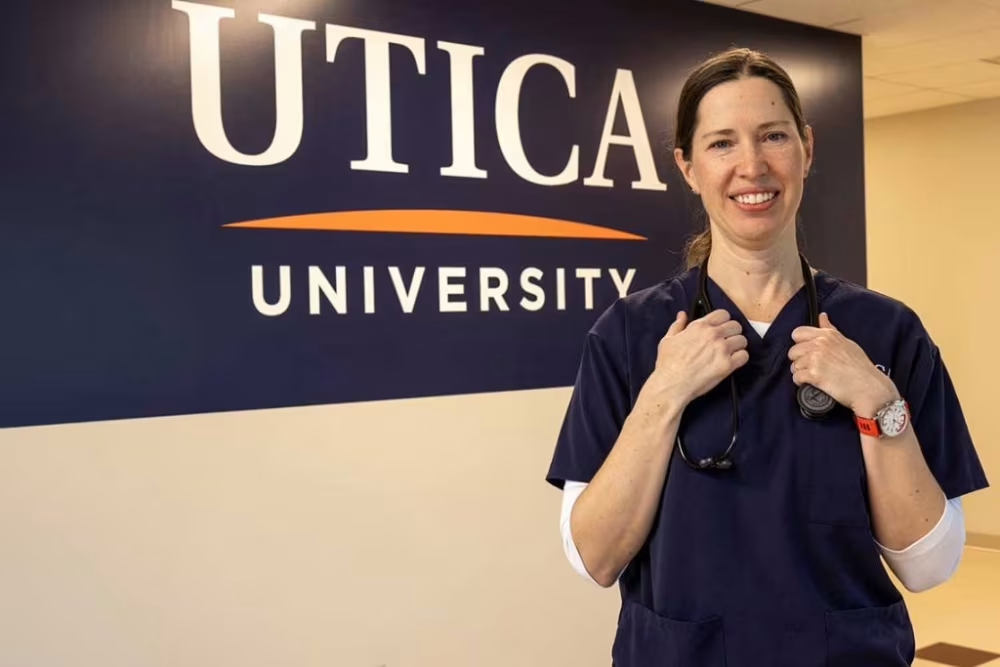
Utica University can help you work toward a future in nursing, no matter which nursing specialty interests you. If you have a completed non-nursing bachelor’s degree or at least 65 college credits, you may be eligible to earn your B.S. in Nursing in as few as 16 months with our ABSN program. Applicants with a conferred associate degree, including 60 credits in liberal arts courses, may be eligible for our Advanced Standing B.S. in Nursing program, which also has a 16-month timeline.
At Utica, you can expect comprehensive nursing education that thoroughly prepares you to tackle modern challenges in nursing. Our attentive faculty members and Academic Success Coaches are committed to supporting your progress.
Request information today to learn more and get started.
