
Professionalism in nursing involves conducting yourself with integrity, treating others with respect, adhering to professional standards, and displaying genuine concern for your patients. It also involves holding yourself accountable when you make a mistake and staying committed to professional development throughout your nursing career.
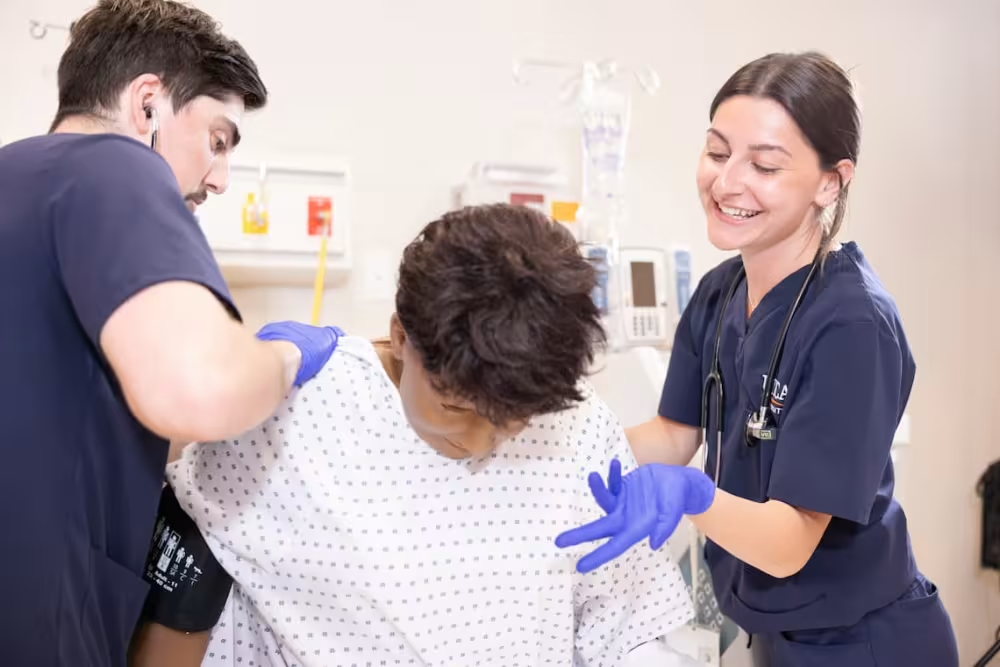
Professionalism is essential in every career field, but it’s especially important in nursing. What is professionalism in nursing? It encompasses nurses’ conduct, as well as their commitment to integrity and to prioritizing person-centered care that is in the patient’s best interests. Professionalism in nursing ensures that patients receive the care, empathy, compassion, and respect they deserve.
At Utica University, you can prepare to become a confident nurse candidate who approaches each patient interaction with professionalism. Utica’s Accelerated Bachelor of Science in Nursing (ABSN) program includes extensive clinical practice, enabling our students to adjust to professional conduct in actual healthcare environments.
Before starting your career as an RN, take a closer look at the concept of professionalism and what comprises professional behavior in nursing. Explore some professionalism examples in nursing and learn strategies to maintain your professional conduct.
What Is Professionalism in Nursing?
Professionalism can be challenging to define because it’s a broad concept. It encompasses how nurses conduct themselves in the clinical environment and how they interact with patients, fellow nurses, and other providers. It also encompasses a nurse’s values, qualities, integrity, and commitment to providing quality care and upholding professional standards.
A nurse who demonstrates professionalism is authentically invested in the quality of their care. They show genuine concern for others’ well-being, readily empathize with patients, and maintain a positive attitude even in challenging situations.
Not every nursing shift proceeds smoothly. Difficulties will arise, such as challenging patients, supply shortages, or understaffing. Nurses who maintain professionalism tackle these roadblocks with grace. They also hold themselves accountable for their own mistakes, reporting them to the charge nurse promptly and working to fix them.
Why Professionalism in Nursing Matters
Professional behavior in nursing is crucial for many reasons. It leads to quality patient care, better patient outcomes, and a more pleasant patient experience. It also helps develop rapport between patient and provider, while fostering a collaborative clinical environment.
Professionalism in nursing is important for:
- Building trust with patients
- Cultivating a positive work culture
- Engaging in ethical practice
- Ensuring patient safety
- Working with others effectively

Discover other important soft skills in nursing.
Key Components of Professional Behavior in Nursing
Because professionalism in nursing is a broad concept, it can be helpful to break it down into its discrete components. In nursing school, after each clinical shift, consider how you demonstrated the different components of professionalism and reflect on ways you could improve moving forward.
The main components are:
- Accountability
- Advocacy
- Collaboration
- Compassion
- Competence and commitment to professional standards
- Integrity
- Respect
A commitment to ongoing professional development is also part of professionalism in nursing.
Professionalism Examples in Nursing Practice
There are numerous ways you can exhibit professionalism in nursing practice. Consider the following examples:
- You can demonstrate accountability by notifying the charge nurse immediately if you make a medication error and taking steps to address the situation.
- Upon noticing that a physician’s order conflicts with the patient’s cultural requirements, you can engage in patient advocacy by voicing your concerns with the physician.
- You can exhibit collaboration and teamwork by answering a call light for a fellow RN who is currently engaged with another patient.
- You can promote your own professional development by taking advantage of all workshops and training events offered by your healthcare facility or pursuing certifications.
Professionalism is also about your appearance. Arrive early for each shift, wearing clean scrubs, with short nails and long hair pulled back. Avoid strong perfumes, as these can irritate patients with chemical sensitivities.

How Nursing Education Builds Professionalism
In your online coursework, you’ll learn about nursing ethics and professional standards of nursing. In skill and simulation labs, you’ll practice simulated patient interactions and learn how to conduct yourself as a professional nurse. Your instructors can serve as role models, demonstrating how nurses maintain integrity and respect even in difficult situations.
During clinical rotations, you’ll practice providing direct patient care under supervision. You’ll learn how to conduct yourself in a clinical setting, how to work well with other nurses, and how to interact with patients.
Common Challenges to Maintaining Professionalism
Maintaining professional behavior in nursing isn’t always easy. It can be difficult to navigate a busy shift when your department is understaffed, let alone maintain your professional demeanor. You may feel tempted, for example, to rush through patient interactions. Yet, it’s essential to ensure each patient has the time they need to ask questions and receive quality care.
Other challenges can include:
- Burnout
- Ethical dilemmas
- Negative work environment
- Patients and family members who are difficult to work with

Explore ways of advancing your nursing career with an advanced nursing degree.
Strategies to Maintain Professionalism in Nursing
As important as professionalism is for nurses, it’s worth implementing some strategies to help you maintain it. Start by examining your current challenges and considering ways of solving them.
For example, if you’re struggling to arrive early for each shift, start getting ready the day before. Ensure all the supplies you need are in your nursing bag, check that your scrubs are clean, and prep a meal to bring with you. Taking these steps can help you arrive early for a smooth hand-off.
Other strategies for maintaining professionalism in nursing include:
- Ask for help. Especially as a new nurse, you may encounter clinical situations that challenge your nursing knowledge and clinical skills. If a patient is a difficult stick, for example, you may need to ask a fellow nurse who excels at IV placement for help.
- Communicate clearly. Don’t hesitate to take a moment to gather your thoughts before responding to a question.
- Give each patient your full attention. When you’re in a patient’s room, pretend that they are your only patient. Listen attentively to their concerns and help them understand their diagnosis and treatment.
- Learn something new. Try to learn something new each day. Take the time to stay current on the latest nursing research and actively seek professional development opportunities.
How Professionalism Impacts Your Nursing Career
When you hold yourself accountable for your actions and decisions, maintain a positive attitude, and work well with others, you can earn the respect of your fellow nurses and of management and administrative staff. This can benefit your career, particularly if you hope to pursue promotion to a leadership role.
Furthermore, nurses who are committed to professionalism are often those who pursue continuing education. Earning professional certifications and an advanced nursing degree may enable you to pursue career advancement.
Develop Professionalism as a Nursing Student at Utica
Utica University provides a supportive nursing school experience, with faculty mentorship and Academic Success Coaches to offer personalized guidance along the way. You’ll complete 588 hours of clinical practice at various healthcare facilities throughout Central New York, enabling you to refine your professionalism and practice interacting and caring for patients.
Request information to get started today. You may be eligible to earn your nursing degree in as few as 16 months if you have a completed non-nursing bachelor’s degree or at least 65 college credits.
